

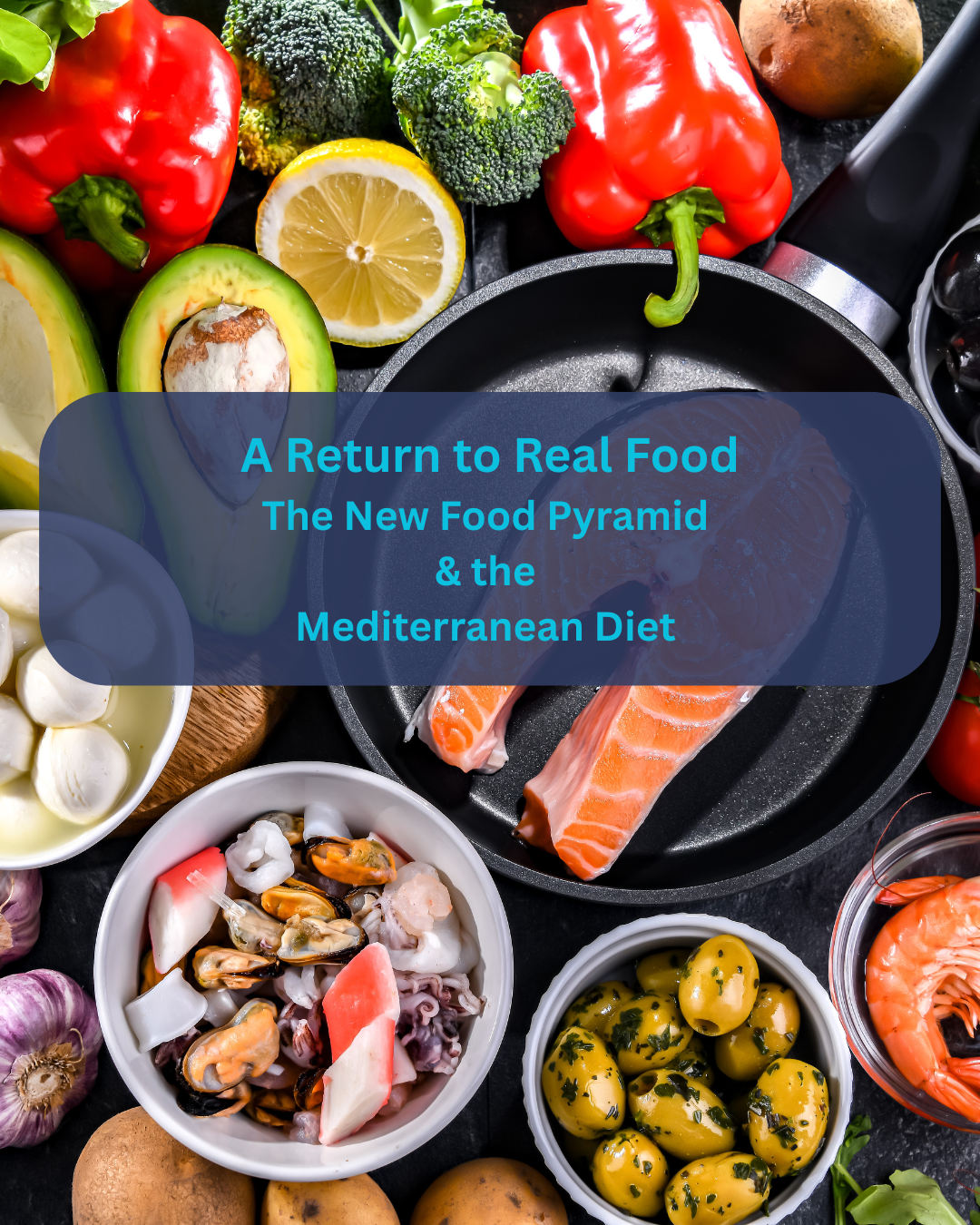
The New Food Pyramid & the Mediterranean Diet: A Return to Real Food
 By Nancy A. Palermo, MD
The newly released 2025–2030 Dietary Guidelines represent one of the most meaningful shifts in federal nutrition policy we’ve seen in decades. For the first time in a long while, national guidance is beginning to align with what science and common sense have been telling us all along: real, whole foods support health, while highly processed foods drive disease.
From a Functional Medicine perspective, this change is long overdue.
The updated guidelines are illustrated using an upside-down food pyramid, emphasizing whole, nutrient-dense foods at the foundation, particularly protein, healthy fats, and lower-glycemic carbohydrates. While the recommendations are not perfect, they signal an important shift toward prevention, metabolic health, and longevity.
At its core, this new pyramid closely mirrors the principles of the Mediterranean diet, one of the most well-studied and consistently beneficial dietary patterns in the world.
The Origins of the Mediterranean Diet
The Mediterranean diet first gained attention after World War II, when researchers from the Rockefeller Institute studied residents of Crete. Despite living in economic hardship, these individuals experienced remarkably low rates of chronic disease and exceptional longevity.
Later, in 1960, Dr. Ancel Keys’ Seven Countries Study documented dietary patterns in Crete and surrounding regions. While parts of that data later led to oversimplified conclusions, particularly the demonization of dietary fat, decades of subsequent research have consistently shown that Mediterranean dietary patterns are associated with lower rates of cardiovascular disease, diabetes, cancer, and cognitive decline.
Ironically, misinterpretation of early data in the U.S. contributed to a low-fat, high-carbohydrate food environment that fueled the obesity and diabetes epidemic we continue to face today.
The “New” Mediterranean Diet: What’s Changed?
The modern Mediterranean diet builds upon traditional principles while reflecting current health research, sustainability concerns, and modern lifestyles.
1. Greater Emphasis on Plant-Based Foods
While fruits, vegetables, legumes, and whole grains have always been foundational, the modern Mediterranean approach encourages even more plant-forward eating, aiming for 8–10 servings of fruits and vegetables daily. Animal products, especially red meat, are consumed less frequently.
2. Healthy Fats Are Celebrated, Not Feared
Olive oil remains central, but the modern approach also embraces:
- Avocados
- Nuts and seeds
- Fatty, wild-caught fish
Fats are no longer viewed as harmful but rather as essential for metabolic health, hormone balance, and the control of inflammation. When animal proteins are chosen, grass-fed and sustainably raised sources are preferred.
3. Sustainability Matters
The new Mediterranean framework recognizes that how food is produced matters. Emphasis is placed on:
- Seasonal and locally sourced produce
- Sustainable seafood
- Reducing food waste
This approach supports both personal health and planetary health.
4. Flexible, Thoughtful Protein Choices
Fish and poultry remain staples, with red meat consumed occasionally. However, the modern Mediterranean diet encourages greater use of plant-based proteins such as beans, lentils, and legumes, while still allowing responsibly sourced animal proteins.
5. Minimal Processed Foods
Both traditional and modern Mediterranean diets strongly discourage:
- Ultra-processed foods
- Refined sugars
- Packaged convenience foods
The updated approach is even more intentional in prioritizing fresh, whole ingredients over engineered ingredients.
6. A Focus on Variety
Diversity matters not just for enjoyment but also for gut health and nutrient exposure. The modern Mediterranean diet encourages rotating foods and exploring a wider range of vegetables, fruits, grains, and legumes to maximize phytonutrient and microbiome benefits.
Why This Way of Eating Works
Decades of research show that Mediterranean-style diets support:
- Cardiovascular health
- Blood sugar regulation
- Cognitive protection
- Reduced cancer risk
- Longevity and metabolic resilience
But the benefits extend beyond nutrients alone.
Food as a Way of Life
Perhaps the most overlooked aspect of Mediterranean eating is how food is consumed.
In Mediterranean cultures:
- Meals are shared
- Eating is unhurried
- Sitting at the table is non-negotiable
- Food is celebrated, not feared
This is not viewed as a “diet,” but as a way of life, one that honors connection, enjoyment, and nourishment.
As we embrace updated nutrition guidelines in 2026 and beyond, adopting this mindset may be just as important as what we put on our plates.
Bringing It Home
The new food pyramid is a step in the right direction — but true health comes from translating these principles into daily life. By prioritizing real food, healthy fats, plant diversity, and mindful eating, we can move away from reactionary medicine and toward prevention, vitality, and longevity.
Food is not just fuel.
It is medicine.
It is culture.
It is connection.
And it’s time we treat it that way.