

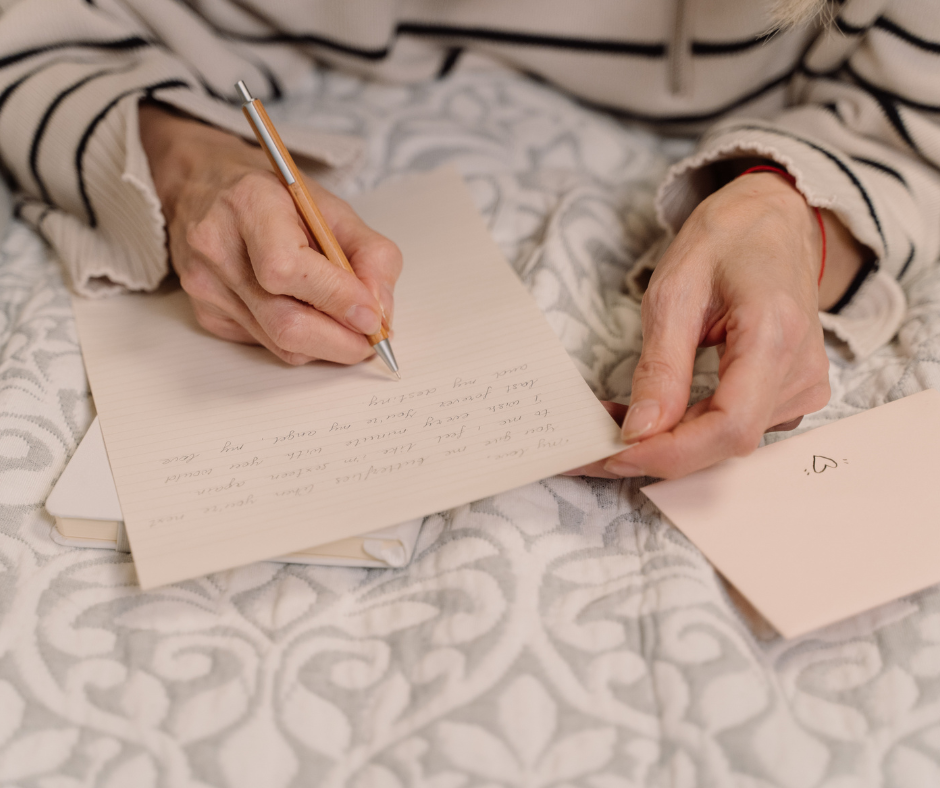
The Lost Art of Letter Writing
By: Dr. Nancy Palermo
“A letter does not have to be eloquent. It does not have to be long. It doesn’t even need to be sent. It simply needs to be real.”
— Ronda Beaman, author of A Life in Letters
Our world is built on speed, efficiency, multitasking, and producing work with very little thought. Letter writing, however, is wonderfully inefficient. It is slow, intentional, and thought-provoking for both the writer and the recipient.
Writing a letter forces us to slow down and be present. It encourages us to reflect on why we are writing and carefully consider the thoughts and emotions we want to express. In doing so, we often organize our beliefs, process unresolved feelings, and gain clarity about experiences that have shaped us.
Letters of forgiveness, sorrow, gratitude, regret, or admiration can give voice to emotions that may have never been spoken or fully understood.
Why Letter Writing Matters
Writing naturally slows us down.
In conversation, we often speak too quickly and without much reflection. A letter gives us the opportunity to thoughtfully choose our words while allowing the recipient to truly hear them without the pressure of responding immediately.
This is one reason letters of forgiveness and gratitude can be so powerful. Likewise, a handwritten note to someone experiencing deep grief or hardship can often express what feels impossible to say face-to-face.
Perhaps most importantly, letters remind people that they matter.
Taking the time to write to someone communicates that they have been on your mind and that they have made a difference in your life. These simple acts of acknowledgment can have a lasting impact.
“Because long after texts are deleted and messages disappear, letters remain. They hold something we are in danger of losing—the unfiltered, imperfect, deeply human act of reaching out and saying, ‘This mattered. You mattered.’
No algorithm can do that. Only you can.
And someone, right now, is waiting for you to write them a letter.”
— Ronda Beaman
This Week’s Challenge
Write one letter each day this week.
You don’t have to mail it. In fact, some of the most meaningful letters are never sent.
Simply write as though the recipient will read every word.
If you’re looking for inspiration, consider writing to:
- Someone you’re grateful for.
- Someone you need to forgive or from whom you seek forgiveness.
- Someone who quietly supported you during a difficult season.
- A friend or mentor you’ve lost touch with.
- Someone you admire, sharing how they have influenced your life.
- A teacher, coach, healthcare provider, or community member who has made a positive difference.
- A family member you’ve been meaning to thank.
Sometimes the greatest gift isn’t receiving a letter.
It’s taking the time to write one.