

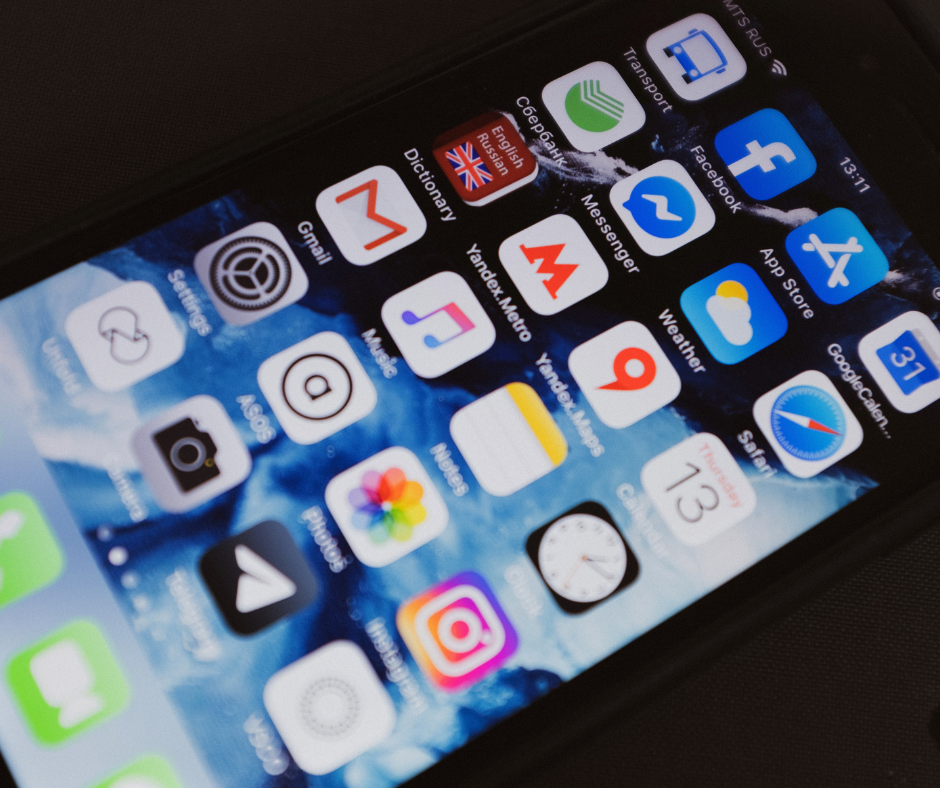
Daily Habits: Get Control of Your Devices
Longevity hacks are the rage, and everywhere we look, we are sold on a new supplement or sauna or specialty food that will take years off our lives. The reality is that, despite the sales pitches, longevity and overall health come down to our daily habits.
Our health isn’t determined by a single meal, one workout, or an occasional doctor’s visit. Small decisions shape it every day. What we eat, how we move, how we sleep, how we manage stress, and even how we interact with technology all influence our physiology, metabolism, hormones, immune system, and long-term health.
The secret to better health isn’t necessarily doing more; it’s doing the right things consistently. That is why focusing on our daily habits is key.
One way we can influence our health is our interaction with technology- specifically our cell phones.
More research has supported the negative impacts of our devices.
So, could your smartphone make you fat, anxious, sleepless? It may seem far-fetched, but studies suggest it might be true.
Smartphones have become one of the most influential behavioral forces in modern life. They affect how we eat, sleep, move, communicate, concentrate, manage stress, and interact with the world.
Although smartphones provide tremendous benefits, their design encourages frequent checking, constant stimulation, instant gratification, and prolonged screen engagement. Over time, these patterns can reinforce behaviors that undermine physical and psychological health.
The biggest concern isn’t simply how many hours we spend on our phones. It’s how smartphones change our daily behaviors, interrupt healthy routines, and displace activities essential for good health.
There is growing research linking problematic smartphone use with:
- Disrupted sleep and altered sleep patterns.
- Increased anxiety, depressive symptoms, and emotional distress.
- Reduced physical activity and increased sedentary behavior.
- Poorer attention, concentration, and cognitive performance.
- Mindless eating and impaired awareness of hunger and fullness.
- Social isolation and reduced face-to-face interaction.
- Increased exposure to social comparison and unhealthy lifestyle messaging.
An important distinction: research often finds stronger associations with problematic or compulsive use than with ordinary smartphone use. Not everyone who uses a smartphone extensively experiences these effects, and associations do not automatically establish causation. Let’s look at the data.
- Smartphones disrupt sleep and recovery
One of the most significant ways smartphones affect health is by disrupting sleep.
There are several mechanisms:
- Blue-enriched light exposure: Evening light can suppress melatonin and delay the body’s internal circadian timing.
- Mental stimulation: Social media, news, videos, and messages keep the brain engaged when it should be winding down.
- Behavioral displacement: Scrolling often replaces sleep rather than simply occurring during otherwise unused time.
- Sleep fragmentation: Notifications, alerts, and the urge to check the phone can interrupt sleep.
Why does this matter? Sleep is essential for metabolic regulation, insulin sensitivity, appetite control, memory consolidation, and hormonal balance.
Chronic sleep restriction can influence our ghrelin and leptin, the hormones involved in appetite regulation. Sleep disruption can affect glucose metabolism and insulin sensitivity and increase cravings for highly palatable, calorie-dense foods. Also, less sleep means less recovery, tissue repair, and immune function.
A 2024 systematic review and meta-analysis of 55 studies and over 41,000 participants found that electronic device use was associated with poorer sleep quality. Problematic use showed an even stronger association with sleep problems.
Practical takeaway: Set aside 30–60 minutes before bed to be phone-free, keep phones out of the bedroom when possible, and disable nighttime notifications.
- Smartphones encourage sedentary behavior
Smartphones make it easy to remain physically inactive without realizing how much time has passed. Have you ever spent time looking at emails on your phone only to find an hour or more has passed? It is easy to see the detriment of use.
Consider how many everyday activities are replaced by phone use:
- Walking becomes scrolling.
- Socializing becomes messaging.
- Outdoor activities become online entertainment.
- Breaks become additional screen time.
- Waiting becomes an opportunity to check notifications.
The health consequences extend beyond weight gain. Prolonged sedentary behavior is associated with increased risk of cardiometabolic disease, poorer cardiovascular health, and reduced physical fitness. A 2025 systematic review from Nambirajan and colleagues found a relationship between problematic smartphone use and sedentary behavior among children, adolescents, and young adults.
Practical takeaway: Replace some screen time with walking, outdoor activity, strength training, and movement breaks. The goal is not just less screen time, but more movement throughout the day.
- Smartphones promote mindless eating and unhealthy food behaviors
This matters especially from a nutritional and metabolic perspective. When we eat while scrolling, watching videos, or responding to messages, we divide our attention between eating and the phone.
This can interfere with mindful eating and our ability to recognize:
- Hunger and fullness.
- Food satisfaction.
- Portion sizes.
- Eating speed.
- Emotional versus physical hunger.
Smartphones also expose us to constant food marketing, restaurant promotions, food delivery notifications, and highly appealing food imagery. This can encourage eating in response to visual cues rather than actual hunger.
A 2026 research study in the American Journal of Clinical Nutrition examined 50 studies looking at distracted eating and found the following:
- Distraction did not significantly increase food intake during the meal across all studies.
- Passive distractions, such as watching television, did increase concurrent intake.
- Eating while distracted was associated with greater energy intake at a subsequent eating occasion.
This suggests that distraction may interfere with memory and awareness of previous food intake, potentially influencing subsequent eating behavior.
Practical takeaway: Make meals phone-free. Eat sitting down, slow down, and focus on the food rather than the screen.
- Smartphones affect attention, concentration, and brain function
We all think we are great multi-taskers; however, our brains are not designed to process multiple streams of information simultaneously with equal efficiency. Smartphones introduce constant interruptions that can interfere with the brain’s normal processes. Each interruption requires the brain to redirect its attention. Even if we do not respond to a text, notification, short video, etc its presence can compete with our attention. Over time, frequent switching can reinforce habits of seeking novelty and immediate stimulation rather than sustaining attention on a single task.
Potential consequences include:
- Reduced ability to concentrate.
- Increased distractibility.
- Difficulty completing tasks.
- Procrastination.
- Reduced deep thinking and reflective processing.
- Increased mental fatigue.
There is also concern about how constant digital stimulation affects developing brains, particularly in children and adolescents. Have you noticed how many people now complain of ADHD? Certainly, smartphones play a role.
Practical takeaway: Turn off nonessential notifications, avoid checking your phone during focused work, and create periods of uninterrupted attention.
- Smartphones contribute to anxiety, depression, and chronic stress
Smartphones can create a cycle of stimulation, anticipation, emotional reaction, and repeated checking. This can create a dopamine-reward cycle that keeps us hooked. Social media platforms can use unpredictable rewards like a new message, a like, or a comment. This leads us to check our phones repeatedly, anticipating something rewarding.
Smartphones can also cause information overload. We are constantly exposed to news, conflict, emergencies, and negative information, which can increase perceived stress and emotional exhaustion.
Fear of missing out (FOMO): Anyone can feel this, but it can be especially problematic in teens. Our devices can make us feel like others are having more exciting experiences or enjoying better lives than we are. This can create dissatisfaction with our own circumstances.
Smartphones reduce our emotional recovery. Instead of allowing the brain to rest during quiet moments, people often fill every available moment with digital stimulation.
A 2025 CDC study of American teenagers found that those reporting four or more hours of daily non-school screen time had substantially higher rates of depression and anxiety symptoms than those reporting less than four hours.
After adjustment for demographic and socioeconomic factors:
- Depression symptoms were associated with 2.51 times the prevalence.
- Anxiety symptoms were associated with 2.12 times the prevalence.
Practical takeaway: Reduce exposure to distressing content, establish phone-free periods, and prioritize real-world relationships and stress-management activities.
- Smartphones interfere with real-life relationships and social connection
One less obvious consequence of smartphone dependence is the loss of meaningful human interaction. Have you ever noticed a couple sitting at a restaurant table, scrolling on their phones instead of interacting?
Consider the number of times people:
- Check their phones during conversations.
- Look at screens during family meals.
- Interrupt social interactions to respond to messages.
- Choose online communication over in-person relationships.
- Reach for their phones instead of engaging with people around them.
Even when people are physically together, their attention may be elsewhere. This can reduce opportunities for meaningful conversation, emotional connection, empathy, and social support.
Practical takeaway: Establish phone-free family meals, conversations, and social gatherings.
- Smartphones influence health choices through marketing and algorithms
Smartphones have become powerful marketing tools. Unlike traditional advertising, digital platforms can use individual interests and engagement patterns to continually deliver targeted content.
This can influence your food and beverage choices, cravings, alcohol consumption, purchase decisions, supplement and wellness product choices, and general health misinformation. The more time people spend engaging with content, the more similar content algorithms may recommend. This creates a feedback loop in which exposure reinforces interest and interest encourages further exposure. For health-conscious consumers, this matters because not everything marketed as healthy, natural, detoxifying, or metabolism-boosting is supported by scientific evidence.
Practical takeaway: Become a critical consumer of online health information. Look for independent scientific evidence rather than relying on influencers, testimonials, or advertising.
So, is your smartphone making you fat and unhealthy? Smartphones may contribute to metabolic and long-term health risks
The combination of poor sleep, inactivity, disrupted eating patterns, and chronic stress creates a potentially unhealthy environment for metabolic health.
These behaviors can reinforce one another:
The smartphone-health cycle: Excessive smartphone engagement leads to constant stimulation and prolonged screen time, which leads to poor sleep and disrupted circadian rhythm and recovery. This, in turn, leads to less movement, more sedentary time, and less exercise. More mindless eating is associated with distraction and increased food cues. All these things lead to chronic stress, emotional stimulation, and overload with long-term metabolic consequences.
So how do you reverse unhealthy smartphone habits?
Rather than eliminating technology, the goal should be to regain control over how and when we use it. A few daily habit changes can help you regain control over your device.
Here are ten practical strategies:
| Behavior | Healthier alternative |
| Checking phone immediately upon waking | Begin the morning without screens |
| Scrolling before bedtime | Establish a 30–60-minute wind-down routine |
| Eating while scrolling | Practice phone-free meals |
| Sitting for hours on the phone | Take movement breaks every 30–60 minutes |
| Constant notifications | Disable nonessential alerts |
| Checking social media repeatedly | Establish scheduled checking times |
| Using phone during conversations | Practice face-to-face engagement |
| Watching distressing content | Curate a healthier digital environment |
| Reaching for phone when bored | Walk, read, journal, or spend time outdoors |
| Sleeping with phone nearby | Charge it outside the bedroom |
A simple digital wellness challenge: 7-day smartphone reset
Small behavioral changes that can help restore healthier routines.
Daily goals
- No phone for the first 30 minutes after waking
- No screens during meals
- Disable unnecessary notifications
- Take a 20–30-minute outdoor walk without scrolling
- Avoid social media for one hour before bedtime
- Keep the phone outside the bedroom overnight
- Spend one full hour engaging in an offline activity