

Cooking at Home: The Cure for What Ails Us
By Nancy A. Palermo, MD
Edited by: Thrive Carolinas
One of the most powerful tools we have to optimize our health is our diet, and making our own food is one of the best ways to control what we eat. Unfortunately, Americans have not gotten the memo.
It is estimated that Americans spend about 5% of their disposable income on food away from home. The good news is that recent trends show 81% of Americans eat most of their meals at home, yet only 17% of those meals are made from scratch. Even when eaten at home, much of the American diet is filled with premade and processed foods that contain higher amounts of sugar, salt, and processed fats.
At the same time, rates of obesity, prediabetes, diabetes, and other cardiometabolic risk factors remain concerning for both adults and children. Our food choices are certainly not the only factor influencing these trends, but they are an important one, and one we can change.
Taking Back Control of What We Eat
Many of us know the food industry has shaped our modern diet. While there are signs of change, transforming an industry this large is a huge undertaking.
A more immediate solution is to focus on our own choices: what we put in our shopping carts and ultimately what we put in our mouths.
Cooking whole foods at home can be good for our waistlines, our wallets, and our health.
A 2019 NIH study found that when diets were matched for presented calories, sugar, fiber, fat, and carbohydrates, participants eating an ultra-processed diet consumed about 500 more calories per day and gained weight compared with those eating an unprocessed diet.
More recent randomized research has continued to demonstrate potential advantages of minimally processed diets. Even when diets were designed to meet nutritional guidelines, participants who ate minimally processed foods experienced greater weight loss than those who ate more highly processed foods. Interestingly, they could eat more food by weight while consuming fewer calories largely because they emphasized whole plant foods.
Cooking at Home Can Save Money, Too
Cooking at home can also be considerably less expensive than eating out, especially as food costs continue to rise. A home-cooked meal can often cost a fraction of what we spend on restaurant meals, takeout, or delivery.
And cooking at home does not have to be time-consuming.
With a little planning, you can often put together a meal faster than it takes to have food delivered—and certainly faster than it takes to drive to a restaurant, order, eat, and return home.
Learn More About Our One Pot Cooking ClassWhy Don’t We Cook More?
Many Americans say they simply don’t enjoy cooking. We often perceive cooking as another stressful chore rather than an opportunity to support our health.
Time constraints, post-work fatigue, cleanup, meal planning, grocery shopping, and a general lack of kitchen confidence can all get in the way.
Many people also lack basic cooking skills. With the decline of home economics and cooking education, generations have grown up without fundamental kitchen knowledge. When people do try to cook, they may feel intimidated or worry that they will spend considerable time creating a meal they don’t even want to eat.
Add delivery apps, drive-throughs, prepared grocery-store meals, and other convenient alternatives, and the pull toward convenience can become difficult to resist.
But convenience doesn’t always have to make our food choices for us.
How to Start Cooking More at Home
No matter your cooking background, start simply and commit to what you can realistically achieve.
If you aren’t cooking at all right now, commit to making two meals a week. Increase that number as you become more comfortable and confident.
Spend a little time over the weekend planning meals for the week. Pick the recipes you want to make, check which staples you already have, and add the remaining fresh ingredients to your grocery list.
Once you’ve completed your shopping, consider doing some prep work ahead of time. Wash and chop vegetables so they’re ready when you need them. Also think about breakfast and lunch options. Dinner leftovers can make great lunches, so make a little extra and take it to work the next day.
Initially, this may feel like a lot of time and effort. But as meal planning and cooking become regular habits, you’ll likely find that the time commitment becomes much more manageable.
Your Kitchen Can Be a Powerful Tool for Better Health
When you cook your own food, you have greater control over what goes into your meals. That is why we are so passionate about sharing kitchen ideas and recipes at Thrive.
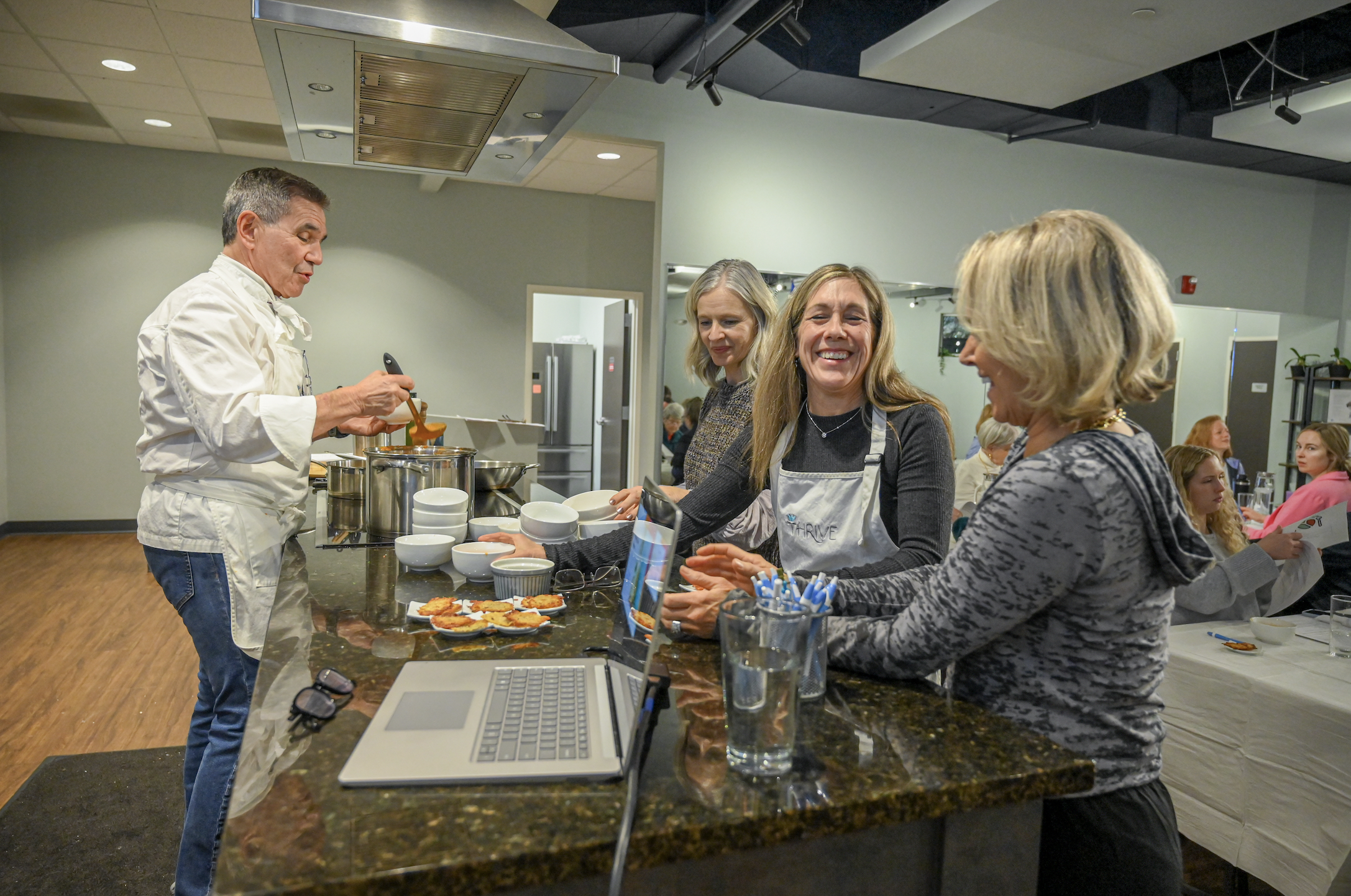
Even before we opened our doors at Thrive, we were providing cooking classes at Whole Foods. We know that helping patients become more comfortable in the kitchen can be an important part of their health journey.
Cooking does not have to be intimidating or complicated. The more you make cooking at home part of your life, the easier it becomes—and the more you may appreciate how you feel when whole, nutrient-dense foods become the foundation of your diet.
Join us this month as we simplify the cooking—and the cleanup—with our One-Pot Meals cooking class. Simplicity can still be delicious, and we think you’ll leave with several recipes you’ll want to add to your regular meal rotation.


