

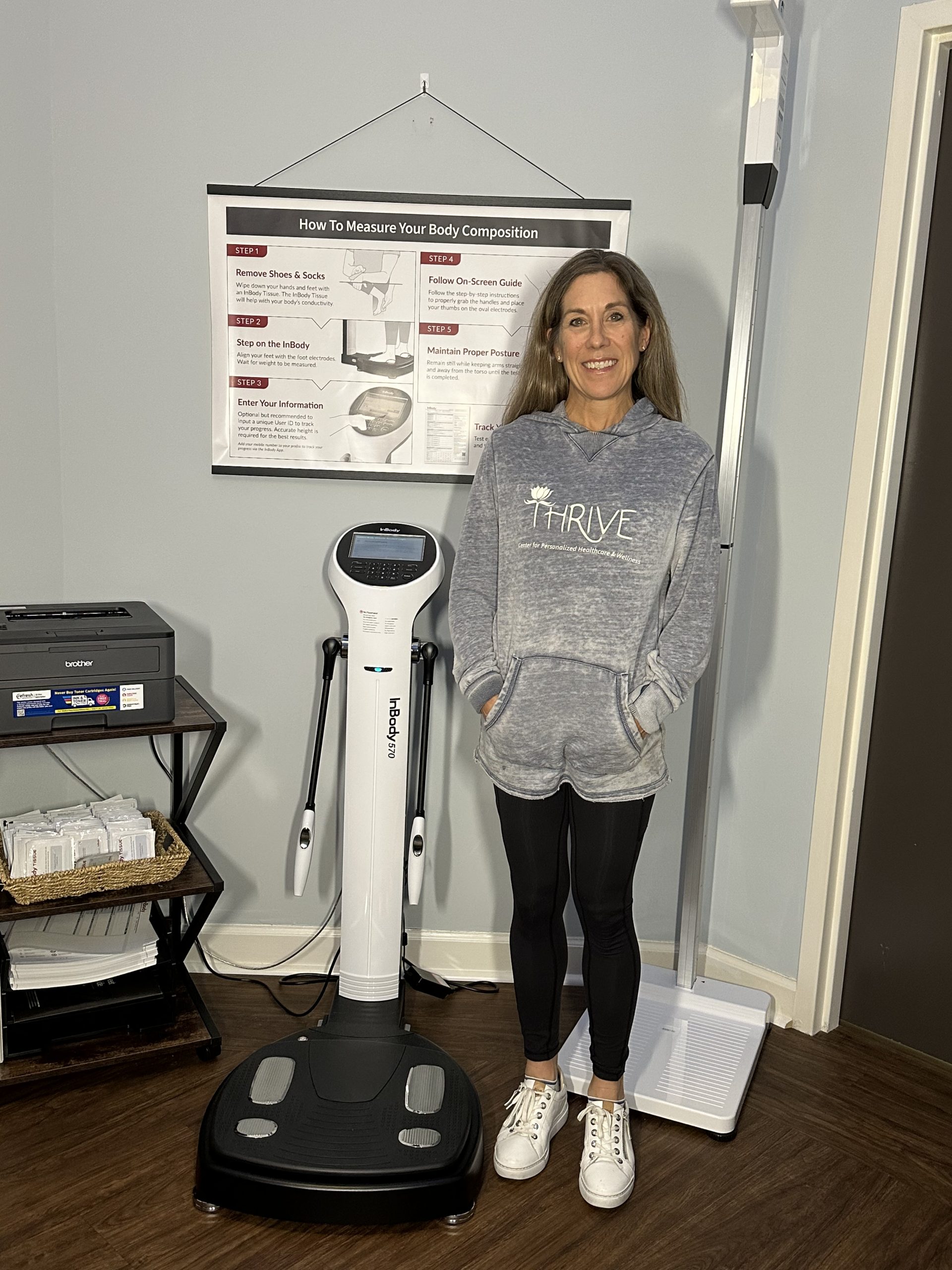
Why You Need to Pay Attention to Body Composition
By Nancy A. Palermo, MD
Recent research continues to highlight the importance of strength training for health and longevity. As we learn more about the role of muscle in metabolic health and chronic disease prevention, it becomes clear that building and maintaining muscle should be a key part of any wellness plan.
However, as we build muscle, we can no longer rely solely on the scale to measure progress. The weight we have been striving for may be far less meaningful than our overall body composition.
What Is Body Composition?
Body composition refers to the percentages of fat mass and lean mass that make up your total body weight.
Fat mass includes:
- Subcutaneous fat (the fat beneath your skin)
- Visceral fat (the fat surrounding your organs)
Lean mass includes:
- Skeletal muscle
- Bone
- Organs
- Body fluids
- Other non-fat tissues
Understanding these components provides a much clearer picture of your health than weight alone.
Why the Scale Doesn’t Tell the Whole Story
When most people set out to lose weight, their true goal is usually to lose body fat while maintaining or building muscle.
The challenge is that traditional scales cannot distinguish between fat loss and muscle gain. As you begin strength training and improving your nutrition, you may gain muscle while losing fat. Since muscle is denser than fat, the number on the scale may change very little—or even increase—even though your health is improving.
This is why body composition measurements are often far more meaningful than body weight alone.
The Problem with Being “Skinny Fat”
You may be at a weight that appears healthy for your height and still have poor body composition.
This is sometimes referred to as being “skinny fat, “having relatively low muscle mass and higher body fat despite a normal body weight. Individuals in this category may still have an increased risk for:
- Insulin resistance
- Metabolic dysfunction
- Cardiovascular disease
- Reduced strength and mobility
- Accelerated loss of muscle with aging
Body composition testing helps identify these risks early and provides a more accurate assessment of overall health.
A Better Way to Measure Progress
If your goal is fat loss, knowing your body fat percentage can provide a more meaningful way to track progress than stepping on a scale.
Instead of focusing on daily weight fluctuations, body composition testing allows you to monitor:
- Changes in body fat percentage
- Muscle gains
- Hydration status
- Overall metabolic health
This approach can also be far more motivating. Seeing improvements in muscle mass and reductions in body fat often provides a clearer picture of success than watching a scale move up and down.
And because muscle burns significantly more calories than fat, increasing lean muscle mass can help support long-term metabolic health and weight management.
Understanding the InBody Assessment
One of the most effective tools for measuring body composition is the InBody® Scan.
The InBody uses a technology called Bioelectrical Impedance Analysis (BIA), which sends safe, low-level electrical currents through the body to estimate:
- Body fat percentage
- Skeletal muscle mass
- Total body water
- Fluid balance
- Visceral fat indicators
Using eight electrodes and multiple frequencies, the device evaluates different body segments and provides a detailed snapshot of your overall composition in just a few minutes.
How Often Should You Measure?
Body composition changes take time.
For most individuals, repeating an InBody assessment every 6 to 12 weeks provides the most meaningful comparison. Many people find that testing every three months aligns well with fitness, nutrition, and weight-management goals.
Take the Guesswork Out of Your Health
If you are working on weight loss, improving your fitness, building muscle, or optimizing your overall health, body composition testing can provide valuable insight that a traditional scale simply cannot.
Ask your Thrive provider about adding an InBody Assessment to your annual wellness visit or fasting lab appointment.
Thrive InBody Special
Add an InBody Assessment to Your Annual Visit
- $25 ($10 savings)
Three InBody Assessments
- $75 ($30 savings)